
Hilingo: Learn & Speak English
Pera SoftEducation
4.863.00 Reviews
- Version
- 2.2.0
- Installs
- 1.00M
- Age Rating
- Everyone
Screenshots
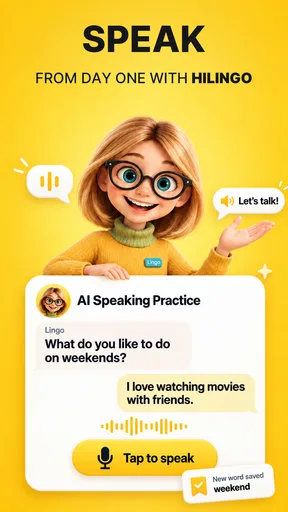

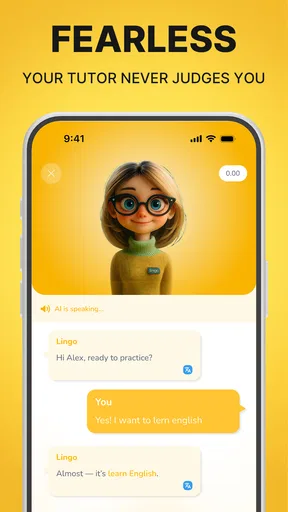
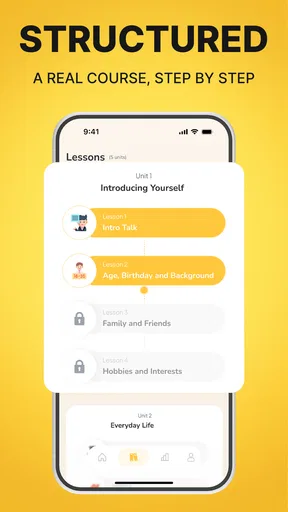
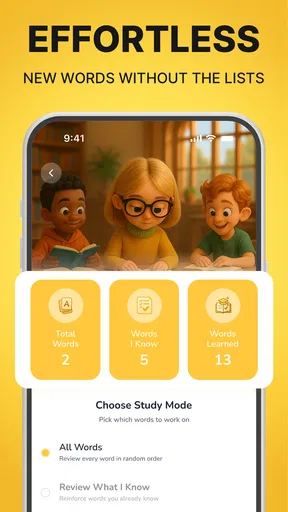
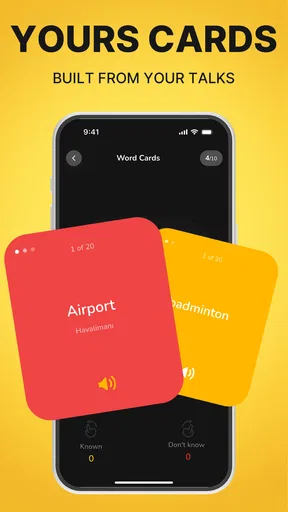

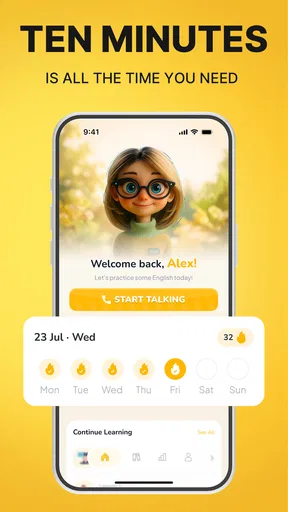
Our Review of Hilingo: Learn & Speak English
 Analysis by Appyee
Learning English is easy to start and surprisingly difficult to maintain. I have tried enough language apps to know that the first few sessions can feel exciting, while the real test arrives when I need to speak after a long day, remember a phrase in conversation, or practice without turning the experience into homework. Hilingo: Learn & Speak English takes a practical approach by putting speaking practice and AI-assisted language work at the center. I found it most useful when I treated it as a repeatable daily tool rather than a complete replacement for every other way of learning.
Hilingo is a free education app from Pera Soft, available for users aged Everyone. Its store summary focuses on making spoken English easier through learning, speaking, and practice with AI, and that description matches the way I approached it: open the app, choose a manageable goal, practice actively, and return often. It has reached over 100K installs and holds a 5.0 average from around 168 ratings, which suggests strong early enthusiasm. The current version is 2.0.7, and it runs on Android 7.0 or later.
How I built a useful everyday routine
I keep my routine useful by tying practice to something I expect to say soon, then noting which part made me pause so I can return to it with a clearer goal. That small bit of preparation also helps me distinguish a learning snag from a setup problem, which is where I’d start if a session does not go smoothly.
The baseline workflow is short enough to repeat
My most productive sessions followed a simple sequence. I began with a clear speaking intention instead of opening the app without a plan. For example, I might decide to practice introducing myself, asking for help while traveling, or explaining what I did at work. That small decision changed the experience because I listened for language I could actually use, rather than trying to absorb everything at once.
After that, I moved into speaking practice and paid attention to whether I could produce an answer naturally. The important distinction is between recognizing English and retrieving it under pressure. Hilingo is better suited to the second problem than a passive lesson, provided I actually speak aloud instead of silently reading prompts. If I only tap through material, I lose much of the reason to use a speaking-focused app.
I finished by repeating the phrases that caused hesitation. This is one of the most useful habits I developed with it. Rather than restarting an entire session, I focused on the small pieces that interrupted my flow: a question I could understand but not answer, a verb form I kept avoiding, or a response that sounded translated from my first language. That made short sessions feel more targeted.
A realistic example is a commuter preparing for an English-speaking meeting. On the way to work, the learner can choose three situations that may come up, practice brief answers, and repeat the weakest response before arriving. The goal is not to become fluent during one ride. The goal is to make the first few sentences easier to say. Hilingo works well for this kind of preparation because it encourages active rehearsal rather than only vocabulary collection.
Use it for situations, not vague promises
I recommend giving each session a job. “Improve my English” is too broad to guide useful practice. “Explain a delayed delivery politely” or “ask a colleague to repeat something” is much better. Specific situations make it easier to notice whether the app is helping, and they also expose gaps that general study can hide.
This approach is especially helpful for learners who understand written English but freeze during conversation. They do not always need more explanations first; they need repeated chances to form an answer. I found that saying an imperfect sentence and trying again was more valuable than waiting until I could construct a perfect one in my head.
Beginners can also use this workflow, but they should keep their responses short. A few reliable sentence patterns are more useful than attempting complex grammar too early. Intermediate learners may get more value by adding detail, changing the tense, or answering the same situation in a more polite and a more casual way. The app becomes more demanding when the learner supplies the challenge instead of expecting every session to do all the planning.
What I would not use it for
I would not rely on Hilingo alone for formal writing, detailed grammar study, pronunciation diagnosis, or exam preparation unless those needs are supported by additional resources. Speaking practice is its natural territory. Someone preparing for an academic test may need structured reading, listening, writing correction, and official practice papers. Someone who wants a complete beginner course may prefer a platform with a clearly sequenced curriculum and extensive explanations.
It is also not the right choice for a learner who refuses to speak aloud. That may sound obvious, but it matters. An AI language app cannot turn passive tapping into real conversational confidence by itself. If privacy, microphone use, or speaking in front of other people is a concern, Hilingo may feel less comfortable than a flashcard app or a text-based course.
Settings worth checking before serious practice
I always check the basic app behavior before settling into a routine. I look at the language used for instructions, the way practice prompts are presented, and whether the session length feels realistic for my schedule. These choices affect friction more than people expect. If the interface asks too much attention at the wrong moment, I am less likely to return, even when the learning activity itself is useful.
Because Hilingo includes AI-assisted practice, I would also pay attention to how I phrase answers. Short, direct responses are easier to evaluate and easier to improve. When I give a long answer containing several ideas, it becomes harder to identify which part needs work. I found it more effective to answer once naturally, then repeat the same idea with simpler wording, and finally try a slightly richer version.
Another worthwhile adjustment is deciding whether the session should prioritize confidence or correction. When preparing for a real conversation, I prefer to keep moving and avoid interrupting every sentence. During a quieter study session, I welcome more correction and repetition. Switching between these two modes prevents practice from becoming either too stressful or too comfortable.
Experienced users should also consider the environment. A noisy bus, a shared office, and a quiet room create different speaking conditions. If I practice only in silence, I may feel less prepared when a real conversation includes distractions. On the other hand, a noisy setting can make a beginner focus on surviving the session rather than learning. I would start in a quiet place, then occasionally introduce mild background noise once the basic responses feel familiar.
How to keep AI practice useful
AI feedback can be encouraging because it gives the learner something responsive to work with, but I would not treat every suggestion as a final authority on natural English. Language has several acceptable ways to express the same idea, and a correction may improve one sentence without being the only correct option. My habit is to ask whether the alternative is clearer, more natural for the situation, or simply different.
I also avoid chasing every unfamiliar word that appears during practice. If a phrase is essential to the situation, I keep it. If it is interesting but unlikely to help me communicate soon, I leave it for later. This protects the session from becoming an endless vocabulary hunt and keeps attention on speaking.
Faster patterns for busy learners
The fastest useful pattern I found was the three-pass response. On the first pass, I answered without stopping, even if the sentence was basic. On the second, I corrected one noticeable problem. On the third, I added one detail. This creates a clear progression from communication to accuracy to range, and it avoids the common trap of trying to perfect everything before saying anything.
A second pattern is to reuse one situation across several days while changing the angle. For a workplace conversation, I might first practice making a request, then responding to a question about it, and later explaining a problem. Repetition does not have to mean repeating identical lines. Keeping the situation stable while changing the response trains flexibility, which is closer to real conversation.
I also recommend building a personal “rescue phrase” habit. These are expressions that help when I need time, clarification, or repetition. Examples include asking someone to say something again, confirming what I understood, or explaining that I need a moment to find the right word. Practicing these phrases is not glamorous, but they prevent a conversation from collapsing when vocabulary fails.
Another useful shortcut is to start with the answer you would genuinely give, not the answer you think an English textbook expects. If I practice a sentence that does not match my real life, I may remember the grammar but fail to retrieve it when needed. Hilingo becomes more valuable when the learner supplies personal details, familiar routines, and realistic problems.
Where the free model fits
Hilingo is free to install and use, which makes it easy to test without committing immediately. The app also includes in-app purchases ranging from $4.99 to $49.99 per item. I would begin with the free experience and judge it by one practical question: does it help me speak more consistently than I did before? If the answer is yes, paid options may be worth considering for someone who wants more from the app, but the decision should come after establishing a habit rather than before it.
The presence of purchases means I would keep an eye on which parts of my routine depend on them. A learner who wants a completely free, fixed curriculum may prefer an app whose entire pathway is clearly available without optional spending. Someone who values flexible AI practice may find the model more appealing, especially if the free access is enough to build confidence first.
Advanced limits and realistic expectations
The biggest limitation is not a missing button; it is the distance between guided practice and spontaneous conversation. Even excellent rehearsal can leave gaps when another person speaks quickly, changes topic, uses humor, or has an unfamiliar accent. I would pair Hilingo with real listening and real interaction once the learner feels ready. A short conversation with a tutor, friend, colleague, or language exchange partner tests skills that an app cannot fully reproduce.
There is also a risk of becoming dependent on predictable prompts. To avoid that, I deliberately change the answer after I become comfortable. I replace a familiar noun, alter the time, disagree politely, or add a reason. This forces retrieval instead of memorization. If the app feels easy because I know what is coming, the right response is to make my answers less predictable, not simply to complete more sessions.
Pronunciation deserves a careful attitude. Speaking practice can make me more willing to talk, but confidence is not the same as accurate pronunciation. I still need to listen closely to native or highly proficient speakers and compare rhythm, stress, and connected sounds. Hilingo is useful as a prompt to speak; it should not be my only pronunciation authority.
Progress can also feel uneven. Some days I answer quickly, while on others familiar phrases disappear. I would not interpret a difficult session as failure. A better measure is whether I can recover faster, explain an idea with simpler words, or continue after making a mistake. Those are meaningful improvements that a simple lesson-completion mindset can overlook.
How it compares with familiar alternatives
Compared with flashcard apps, Hilingo is more relevant when the problem is producing language rather than recognizing it. Flashcards are excellent for building a vocabulary base and reviewing at precise intervals, but they rarely recreate the pressure of forming a response. I would use flashcards to support Hilingo, not necessarily to choose one over the other.
Compared with grammar-first courses, Hilingo feels more immediate. Grammar courses can provide a stronger explanation of why a sentence works, while speaking practice helps me use a sentence without pausing to analyze every rule. A learner who repeatedly makes the same grammatical mistake may need both: an explanation from a structured course and repeated production inside Hilingo.
Compared with one-to-one tutoring, the app is more convenient and easier to fit into small gaps in the day. A tutor can react to nuance, correct communication problems in context, and provide human encouragement that an app cannot fully duplicate. The trade-off is cost, scheduling, and availability on the tutor side. I see Hilingo as a practical rehearsal partner, not a total substitute for a skilled teacher.
Compared with a traditional phrasebook, it offers a more active way to practice. A phrasebook is still better when I need a quick translation or a dependable reference while traveling. Hilingo is better before the situation, when I want to rehearse saying the phrase and adapt it to my own needs.
Who will get the most from it
I would recommend Hilingo to learners who already know some basic English and want to become quicker at speaking. It is particularly suitable for people who understand more than they can say, travelers preparing for common interactions, professionals rehearsing everyday workplace communication, and self-directed learners who can create their own realistic practice goals.
It may also suit a complete beginner who is comfortable starting with short answers and accepting gradual progress. The key is patience. A beginner should not judge the app by whether it produces fluent conversation immediately. The early win is being able to produce a simple sentence, notice a problem, and try again without giving up.
I would suggest a different primary tool for learners who need a formal syllabus, extensive writing correction, advanced exam preparation, or deep grammar instruction. Hilingo can still complement those goals, but it should not carry the entire learning plan. Likewise, users who dislike AI-guided interaction or do not want to speak aloud may find a reading or vocabulary app more comfortable.
My mastery verdict
After using Hilingo as a speaking companion rather than a magic shortcut, I came away with a positive but measured opinion. Its strongest quality is that it makes active English practice easier to begin. The free entry point lowers the barrier, the AI focus encourages interaction, and the app fits short routines better than a heavy study plan. I especially like it when I give each session a concrete situation and repeat the responses that expose hesitation.
Its limits are equally important. It cannot replace real conversations, a complete language curriculum, or expert feedback for every advanced need. The learner has to supply consistency, speak aloud, and resist the temptation to confuse completing prompts with mastering communication. Optional purchases also mean that users should decide carefully whether the expanded experience justifies spending after trying the basic workflow.
My recommendation is simple: use Hilingo to turn passive English knowledge into spoken practice, then connect that practice to real people and real situations. If you want a flexible education app that helps you rehearse everyday English in manageable sessions, it is worth trying. If your priority is a full academic program or highly specialized correction, choose a more comprehensive solution and keep this one as a speaking-focused supplement. In my experience, the best results come from a modest routine repeated often, with each session aimed at something I genuinely expect to say.
For an app in the education category, that is a sensible role. Hilingo does not need to solve every part of language learning to be useful. It only needs to help me open my mouth, form the sentence, recover from the mistake, and try once more. When I use it that way, Hilingo: Learn & Speak English becomes a practical bridge between knowing English and actually using it.
Privacy and Permissions
See what permissions an app requests and how it handles your data.
- Microphone
- record audio
- Wi-Fi connection information
- view Wi-Fi connections
- Other
- view network connections, full network access, change your audio settings, run at startup, control vibration, prevent device from sleeping, Google Play license check, read Google service configuration
Verdict
Strengths of Hilingo: Learn & Speak English
- Short lessons make it easy to study during spare moments.
- Speaking exercises encourage active use of new vocabulary.
- Progress tracking helps maintain a consistent learning routine.
- Suitable for beginners who need structured English practice.
- Audio activities support listening and pronunciation development.
Limitations of Hilingo: Learn & Speak English
- Some advanced content may feel limited for experienced learners.
- Full access to lessons and features may require a subscription.
- Speech recognition can misjudge pronunciation in noisy surroundings.
- The learning path offers less flexibility for users with specific goals.
- Repeated exercises may become monotonous over longer study sessions.
Similar Picks in This Category
View All
Duolingo: Language Lessons
Duolingo4.7

Google Classroom
Google LLC2.8

Unacademy: Learn & Crack Exams
Unacademy3.2

Bible App for Kids
Life.Church4.4

Cake - Learn English & Korean
Cake Corp.4.7

Brainly: AI Homework Helper
Brainly4.5
Frequently Asked Questions
What is Hilingo: Learn & Speak English, and who is it designed for?
Hilingo: Learn & Speak English is a mobile learning app focused on helping users improve practical English skills through guided lessons, vocabulary practice, listening activities, and speaking exercises. It may suit beginners as well as learners who want to refresh their everyday English. Before downloading, users should consider their current level and check whether the available course content matches their goals, such as travel, conversation, work, or general study.
Does Hilingo help users practice speaking and pronunciation?
Speaking practice is one of the main reasons to try Hilingo. The app is designed to encourage users to repeat phrases, work on pronunciation, and build confidence with common English expressions. As with any language-learning tool, it should be treated as practice rather than a replacement for real conversations with fluent speakers. Results will depend on how regularly you use the exercises and whether you actively speak aloud instead of only reading or listening.
Can I use Hilingo: Learn & Speak English without an internet connection?
Offline availability can vary depending on the lesson, app version, and the developer’s current settings. Some language apps allow selected lessons or audio content to be downloaded, while other activities require an active connection. It is worth checking the app’s description and testing the download options after installation if offline study is important to you. Users should also expect updates, account features, advertisements, or synchronization to require internet access.
Is Hilingo free to download, and does it include in-app purchases?
Hilingo may be available as a free download, but some lessons, learning tools, advanced features, or ad-free use can depend on the app’s subscription or in-app purchase plan. Pricing and trial conditions may differ between Android and iOS and can change over time. Before confirming a purchase, review the payment screen carefully, including renewal terms, trial duration, and cancellation instructions, especially if you only want to test the app.
How effective is Hilingo for learning English, and what are its limitations?
Hilingo can be useful for building a consistent study habit, expanding everyday vocabulary, practicing listening, and gaining confidence with basic spoken English. Its effectiveness depends largely on regular use and active participation. However, an app alone may not provide the depth of feedback, spontaneous conversation, writing correction, or cultural context offered by a teacher or language exchange partner. Combining Hilingo with real speaking practice, reading, and listening can produce better long-term progress.
